Introduction: A New Era of Possibility
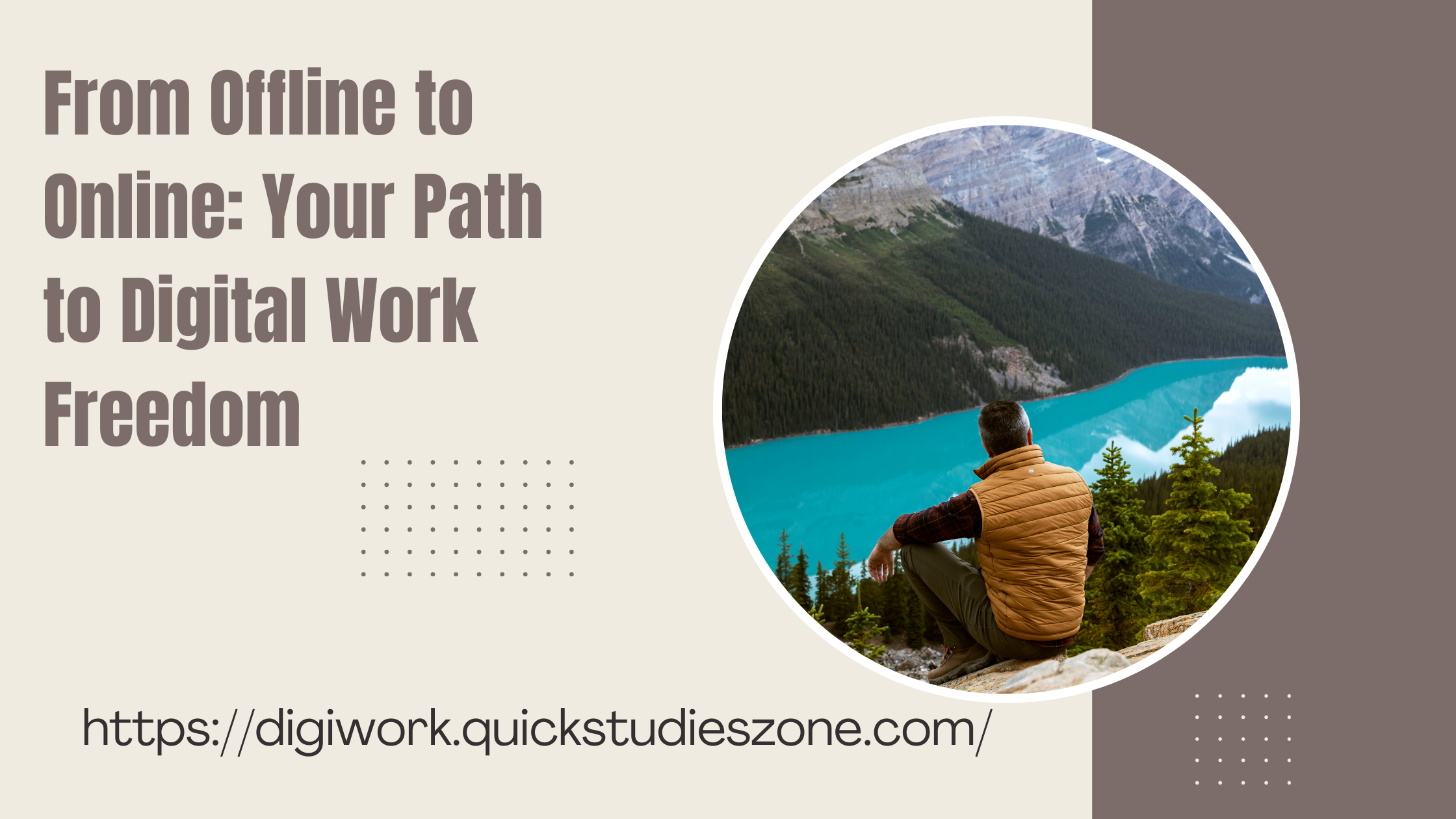
For decades, work was defined by the physical spaces—offices, factories, shops, and meeting rooms. From Offline to Online: Your Path to Digital Work Freedom. Success depended on where you lived, how far you could commute, and which companies existed in your city. But times have changed. The digital world has reshaped our understanding of work, productivity, and opportunity. Today, individuals from any background can step into an online career and build a life that offers flexibility, financial stability, and personal freedom.
From Offline to Online:
Your Path to Digital Work Freedom is something more than a guide; it’s an empowering roadmap for anyone ready to transform skills, passions, and experiences into meaningful digital work.From Offline to Online: Your Path to Digital Work Freedom. Whether you are transitioning from a traditional job, returning to the workforce, or starting fresh, the online world holds endless possibilities. This blog will take you through the mindset shifts, practical steps, and strategic moves that you need to make in order to embrace digital work and create a future in which freedom is not just something dreamed about, but real and yours every day.
Understanding Digital Work Freedom
Digital work freedom means earning, creating, and growing using digital tools and platforms, free from a traditional workspace or schedule. It’s all about independence, flexibility, and the freedom to create your lifestyle around what matters most in your life.
Digital work freedom includes:
Choos-ing when you work
Choosing where you work
Multiple streams of income
Working with clients or customers all over the world
Building digital products or services that scale
Creating life on your terms
Unlike offline work, digital work will not limit you to your geographic location, physical availability, or local opportunities; it opens a market to you with limitless, global potential.
Why More People Are Moving From Offline to Online
The shift from offline jobs to online careers has accelerated dramatically. There are a few key reasons as to why people are making the transition:
1. Flexibility and Work-Life Balance
Digital work allows people to put health, family, personal time, and mental well-being as priorities without compromising income.
2. Global Opportunities
You are no longer limited by your city or country. Your skills can now be accessed by clients, customers, and employers throughout the world.
3. Low Entry Barriers
While most offline businesses require a high starting cost, many online careers require nothing more than a laptop or a smartphone.
4. Demand for Digital Skills
With increasing business on the internet, there is a need for digital marketers, content creators, virtual assistants, editors, designers, and many more.
5. The Rise of Remote Work
Companies are now hiring remote employees, freelancers, and consultants because digital work is efficient, scalable, and cost-effective.
The digital world is no longer the future; it’s the present. Those who learn to thrive in it will be leading the next generation in success.
The Mindset Shift: Thinking Digital
Before making the transition from offline to online work, one thing needs to change first: the mindset. Digital thinking is all about flexibility, continuous learning, and innovation.
You should acknowledge that:
Learning new skills is normal
The digital space is a fast-evolving one. Adaptation keeps you relevant and competitive.
Progress, not perfection.
You don’t need perfect designs, perfect posts, or perfect portfolios to get started. It is starting that matters.
Self-belief is indispensable.
Digital careers call for confidence in your value and your ability to adapt.
Growth takes time.
Building clients, opportunities, or audiences doesn’t happen overnight, but the long-term rewards are well worth the effort.
Shifting from an offline mindset-fixated on fixed schedules, rigid rules, and limited opportunities-toward an online one characterized by flexibility, creativity, and abundance is the first step toward digital freedom.
Step 1: Identify Your Digital Skills
Your transition begins with recognition of which of your existing skills can translate into online work. Almost every offline skill has its digital counterpart.
Examples of transferable skills:
Teaching → Online tutoring, course creation
Writing → Content writing, copywriting, blogging
Customer service → Virtual assistance, support roles
Sales → Digital marketing, affiliate marketing
Administration → Project management, remote assistance
Creativity → Graphic design, editing, content creation
You don’t need to acquire new skills to start; what you need is clarity on the skills you already possess. Once identified, this can then be built upon with digital tools and techniques.
Step 2: Learn Essential Digital Tools
The next step is to become confident with digital tools. From Offline to Online: Your Path to Digital Work Freedom. You don’t have to know how to use sophisticated software; straightforward and simple tools will facilitate your work online.
Some of the must-know tools include:
Communication: Zoom, Google Meet, Slack
Organization: Trello, Notion, Google Workspace
Creation can be done in Canva, CapCut, or Adobe Express.
File Sharing: Google Drive, Dropbox
Marketing: Instagram, TikTok, YouTube, email platforms
You don’t need to learn it all at once. Just start with the tools most relevant to your digital path and expand over time.
Step 3: Choose Your Digital Work Path
There are so many ways to make money online. The key is finding one that fits your strengths, interests, and lifestyle.
1. Freelancing
Offer your services directly to the clients.
Examples include graphic design, social media management, writing, editing, and web development.
2. Remote Jobs
Work for a company from anywhere in the world.
Examples include: administrative support, HR, marketing, sales, tech support.
3. Online Coaching & Consulting
Turn your knowledge into guidance for others.
Examples include: life coaching, fitness training, business consulting.
4. Content Creation
Build an audience and monetize through ads, sponsorships, affiliate marketing, or digital products.
Examples include YouTube, TikTok, Instagram, blogging.
5. Digital Products
Develop assets that can be sold over and over again.
Examples: Ebooks, templates, presets, online courses.
6. E-commerce
Sell physical or digital goods via an online store.
Examples include Shopify, Etsy, and Amazon.
Choosing a digital path is about understanding what kind of work energizes you, and what lifestyle you want to create.
Step 4: Build Your Digital Presence
Your digital presence is your online identity. It introduces you to potential clients, customers, or followers.
Key elements of strong presence include :
A clear message about what you do
A professional profile on the right platforms
A portfolio or highlights of your best work
Consistent content that shows your expertise
You don’t have to be everywhere online. Focus your attention on the platforms where your audience or clients are most active.
A strong digital presence makes you stand out, helps build trust, and attracts opportunity organically.
Step 5: Start Small-But Start Smart
So many people are hesitant to start because they believe they need to have everything figured out. But digital success develops from modest roots.
Here’s how to start smart:
Offer a simple service at the start.
Take on small projects or clients
Create a few pieces of portfolio work
Start posting content regularly.
Practice using digital tools
Learn one skill deeply before adding another
The key is consistency: every small action compounds into momentum.
Step 6: Monetize Your Skills and Time
Once set up online, it is now time to earn. Monetization happens in stages, usually starting with service-based income and expanding into scalable digital products.
Ways to monetize include:
hourly or project-based freelancing
remote job salaries
coaching packages
consulting sessions
affiliate marketing
Ad Content
digital products
memberships or subscriptions
As you grow, your online career shifts from active income (time-based) to passive or semi-passive income, such as digital product sales, automated systems, and content monetization.
Step 7: Scale into True Digital Freedom
Scaling, to me, means creating a system where you get to earn more with less work. Where digital work becomes digital freedom.
Scaling involves:
automating repetitive tasks
delegating work to assistants or collaborators
Building multiple streams of income
creating evergreen products
launching digital courses or memberships
improving your systems and processes
When your work becomes scalable, your income isn’t hindered by your time or energy anymore. You are free, not just financially, but emotionally and creatively.
Common Challenges and How to Overcome Them
Transitioning from offline to online may sound daunting, but every problem has a solution.
1. Fear of the unknown
Solution: First, take small steps and learn gradually.
2. Lack of digital skills
Solution: Free online tutorials, practice, and consistency.
3. Imposter syndrome
Solution: After all, every master once was a novice.
4. Difficulty finding clients
Solution: A better portfolio, better online presence, and networking.
5. Information overload
Solution. Focus on one path at a time; clarity beats speed.
Each obstacle is part of the journey. What matters most is that you are willing to continue on.
The Future of Work is Digital
The world of the web doesn’t shrink; it expands. Where more industries go online, so does the opportunity.
The future belongs to people who:
embrace technology remain flexible learn constantly create value connect authentically You are not late-you are early enough to create a powerful digital future.
Conclusion:
Your Journey Starts Now It is not just a career change; moving from offline to online is a way of life. It is about taking control of your time, your income, and your future. The digital world opens up possibilities to work from anywhere, create meaningful income, and design your life to align with your values. Your path to digital work freedom starts with one decision: to begin. Not next month. Not next year. Today. The tools are available. The possibilities are endless. The blueprint’s in your hands. Now it’s your turn to step confidently into the world of digital work, creating a future where freedom, fulfillment, and possibility mark your everyday life.